Make the space meaningful · 8 min
Light, rangoli, and a welcoming home
Use light, color, flowers, and household-approved making to create welcome without visual clutter or borrowed symbolism.
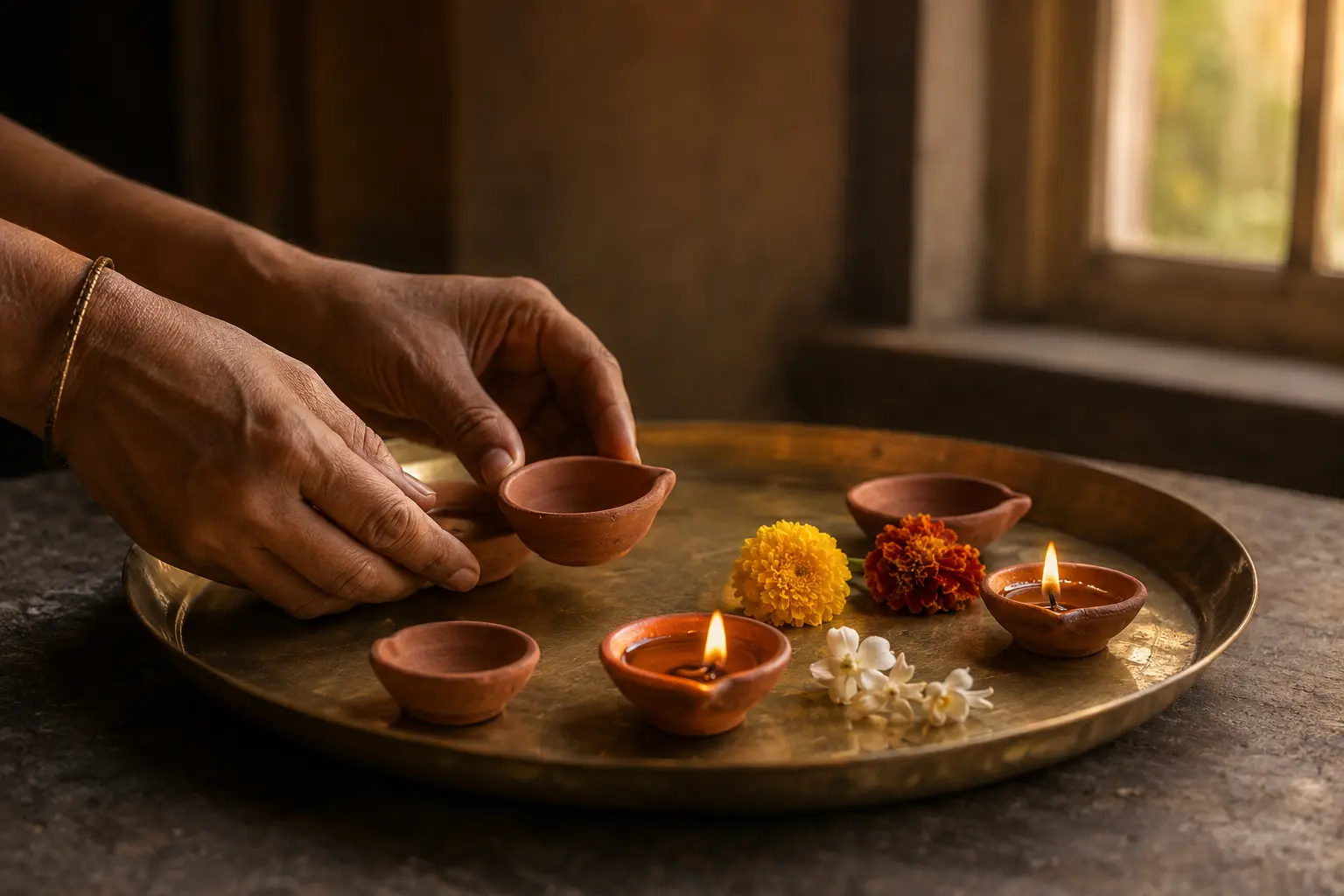
Decoration is most powerful when it marks a transition, guides people through the space, or carries a family story. It does not need to fill every surface.
Start at the threshold
The entry can signal welcome and help guests understand where shoes, coats, and movement belong.
- Keep floor designs away from the path needed by mobility devices, children, pets, and serving traffic.
- Use flowers, steady light, or a household-appropriate design with a clear reason for being there.
- Secure cords and keep loose fabric away from heat sources.
Treat rangoli as practice, not a motif pack
Materials, names, patterns, placement, and meaning vary. Learn from your family or a trusted cultural source rather than copying a sacred image because it looks festive.
- Choose materials that fit the surface, cleanup, allergies, pets, and local conditions.
- Use simple geometric or floral learning exercises when you are still exploring.
- Do not place a design where people must step over it without understanding the household practice.
Build a lighting plan
Separate atmosphere from flame safety. Decide where light belongs, who supervises it, and when it is extinguished.
- Place diyas on stable, heat-resistant surfaces away from curtains, sleeves, children, and pets.
- Use rechargeable flameless lights where open flame is unsuitable.
- Keep matches, lighters, and hot oil under adult control and check smoke alarms.
A note on difference
Use this guide as planning support, not religious authority.
Dates, stories, practices, foods, and language vary across communities and households. Confirm what belongs with family, elders, religious institutions, and trusted local sources.
See our sources and date policy