Family learning · 8 min
Diwali with children
Help children participate through stories, useful roles, sensory choices, and questions that match their age.
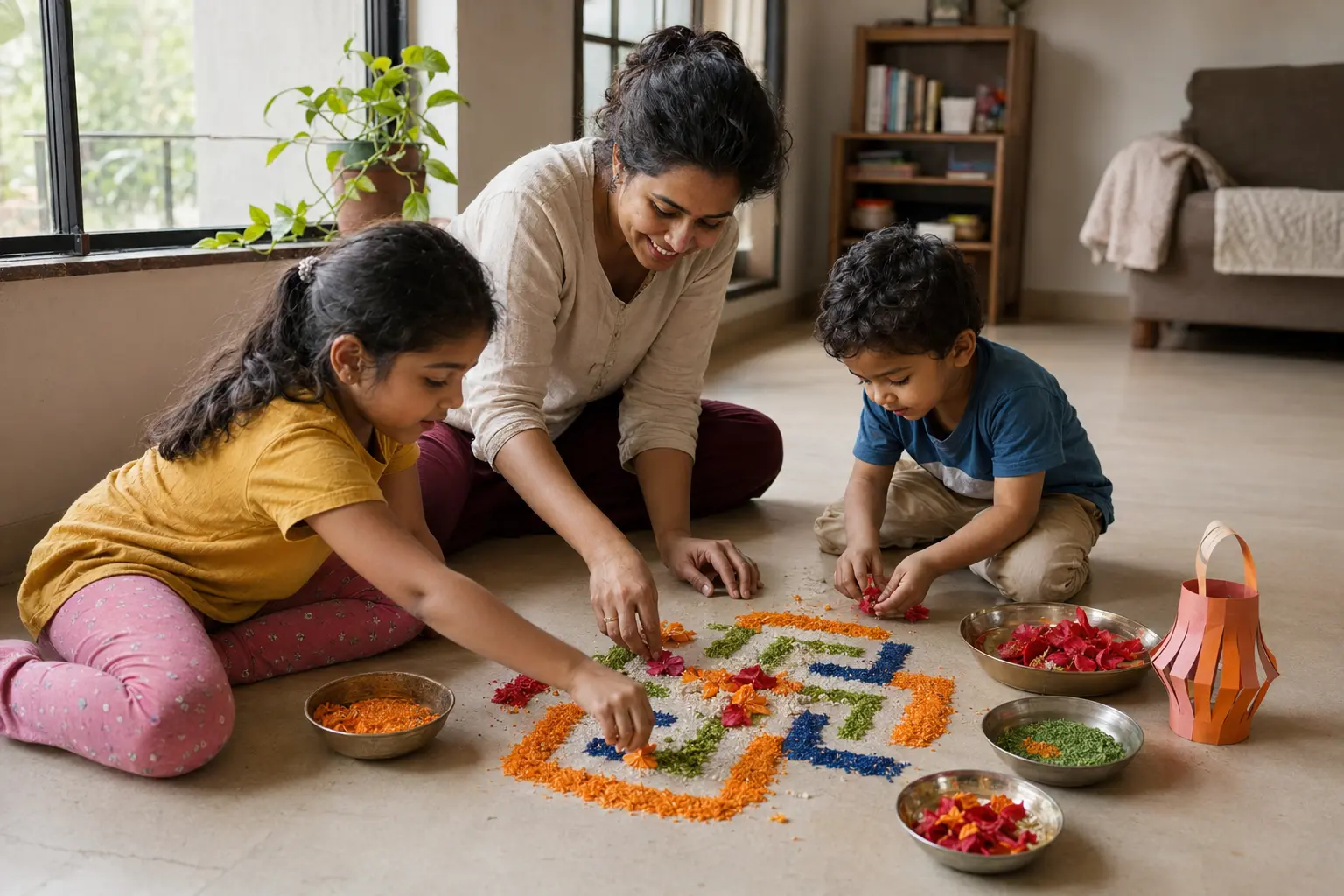
Children remember what they are allowed to touch, make, ask, and repeat. The best learning is connected to the household’s actual practice rather than a universal festival script.
Match the story to the household
Different communities connect the season with different histories and meanings. Begin with the story your family or community tells, and explain that other people may tell another one.
- For younger children, use one short story and a familiar person as narrator.
- For school-age children, ask them to interview an elder or compare two community sources.
- Avoid saying every family performs the same puja or follows the same five days.
Offer jobs that matter
Participation feels different when children contribute to the celebration rather than being handed a festival-themed worksheet.
- Let them welcome guests, place unlit decorations, label foods, or choose a giving activity.
- Use supervised flower petals, chalk, paper, or other household-approved materials for making.
- Keep flames, matches, hot oil, and electrical setups under named adult supervision.
Design for different energy
Excitement, noise, clothing, unfamiliar food, and long visits can be a lot. A quiet option helps more children stay connected.
- Explain the sequence of the evening before it begins.
- Create a low-sensory area with familiar food, seating, and an easy return path.
- Do not force greetings, prayer, performance, special clothing, or physical participation.
A note on difference
Use this guide as planning support, not religious authority.
Dates, stories, practices, foods, and language vary across communities and households. Confirm what belongs with family, elders, religious institutions, and trusted local sources.
See our sources and date policy