Dates without false certainty · 8 min
Which day should we celebrate?
Separate a useful planning date from the local calendar, religious timing, and family sequence that may guide your observance.
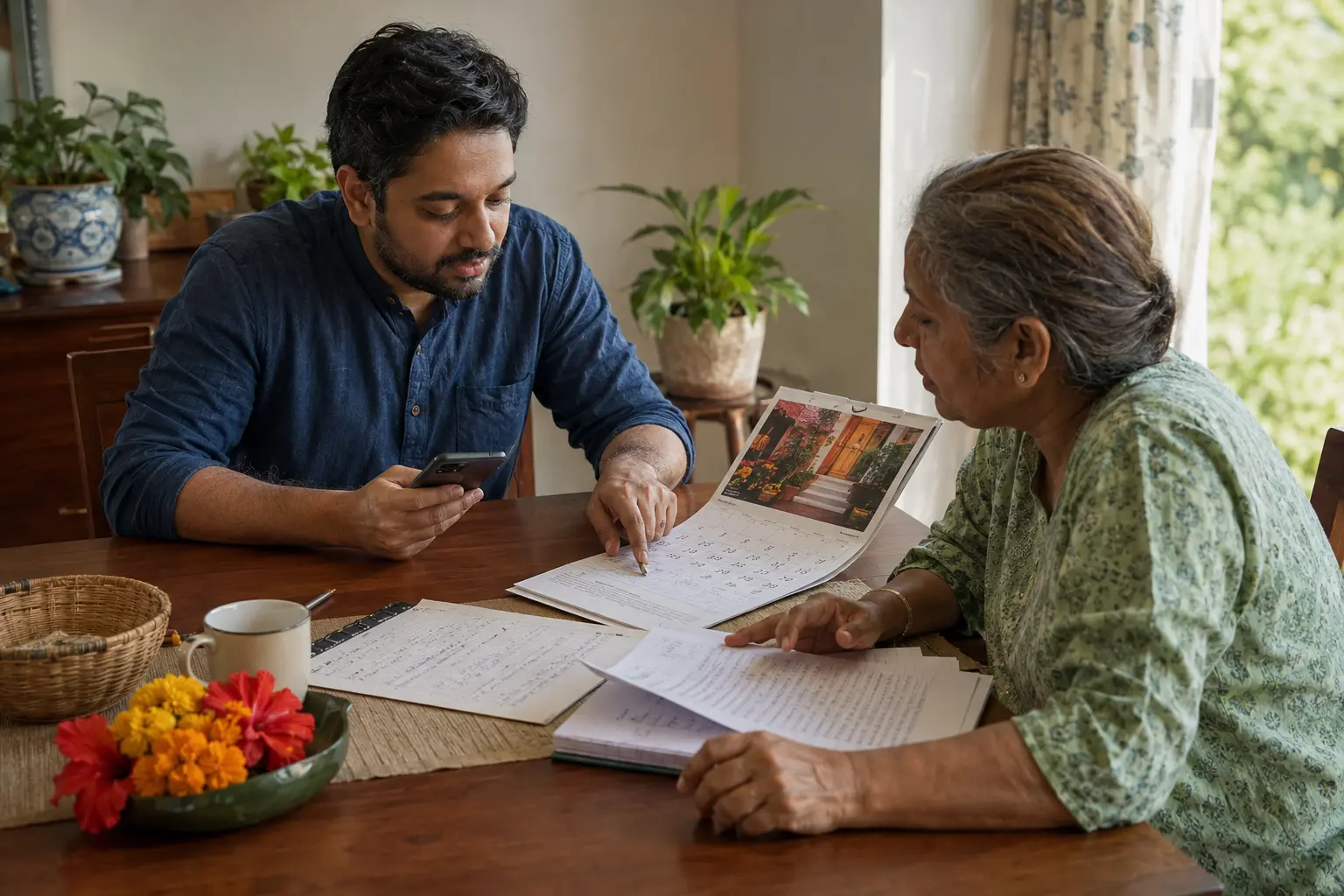
A date on a national calendar can help you request leave or invite guests, but it cannot settle every local or tradition-specific observance. Start by naming what the date needs to do for you.
Identify the decision you are making
A school event, family meal, temple visit, prayer, New Year observance, and community gathering may use different dates or times without one of them being an error.
- For invitations and leave, choose the clearest general planning anchor and label the year and location.
- For religious observance, use qualified local guidance rather than a generic countdown.
- For family events, ask which day people can gather and which observance must remain on its own date.
Ask what calendar the answer comes from
Dates can differ because of location, time zone, tradition, lunar-calendar interpretation, and which observance a source is naming.
- Check the source, year, location, and tradition before copying a date.
- Do not treat a national public holiday as a universal religious timing.
- When two trusted sources differ, name the difference and follow the guidance appropriate to your household.
Plan for a sequence, not a single answer
Some households mark several related days; others focus on one. Build the plan around the observances that actually belong rather than assuming a universal five-day program.
- List the names of the days your household recognizes before assigning tasks.
- Keep community schedules separate from home observances so neither is accidentally replaced.
- Add one sentence to invitations explaining which date and part of the season you are gathering for.
A note on difference
Use this guide as planning support, not religious authority.
Dates, stories, practices, foods, and language vary across communities and households. Confirm what belongs with family, elders, religious institutions, and trusted local sources.
See our sources and date policy