A calmer table · 9 min
Diwali food without the overwhelm
Shape a generous-feeling menu around your household, time, dietary practice, and actual cooking capacity.
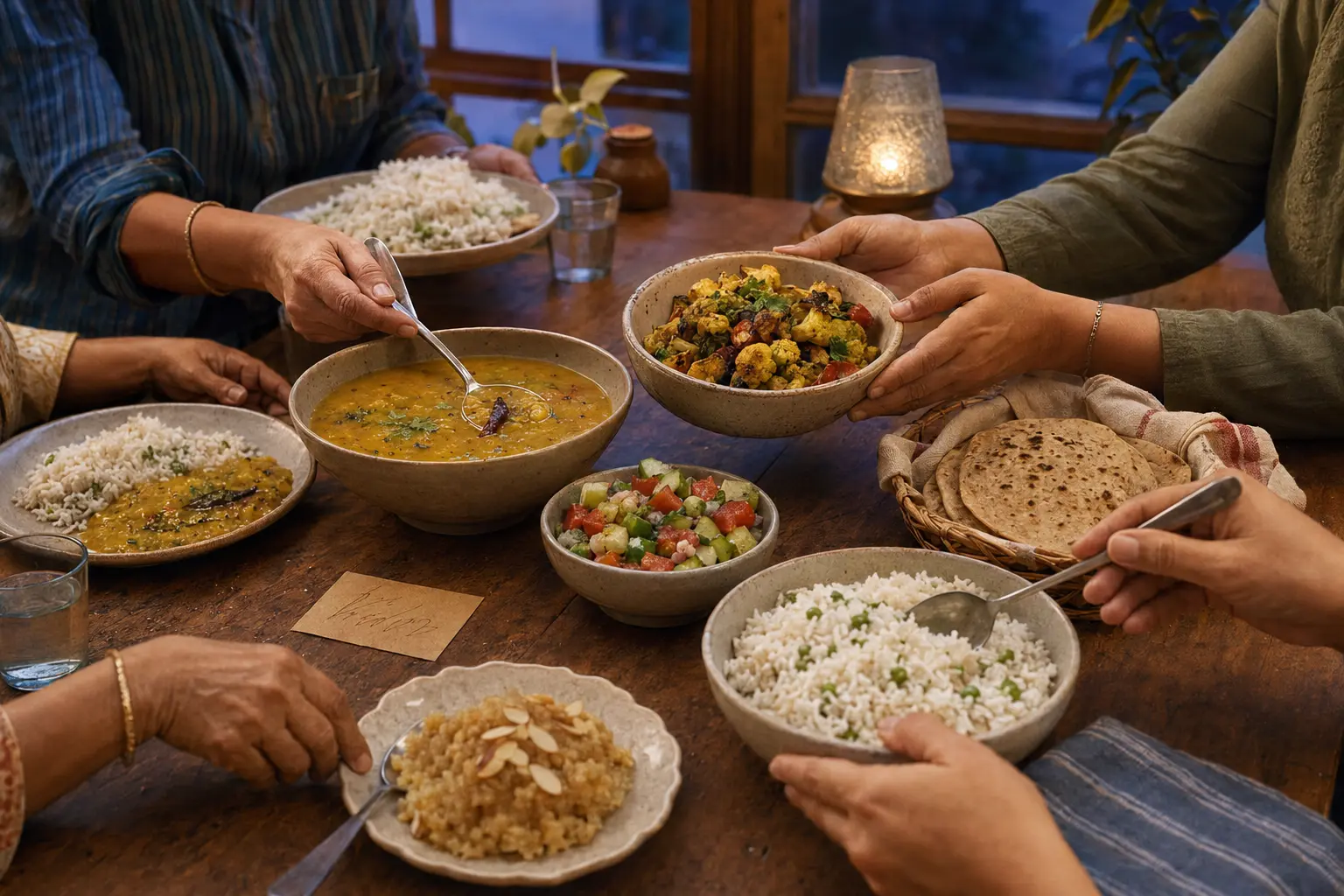
There is no single universal Diwali menu. A useful plan begins with the foods that matter in your family or community, then makes the work and allergy information visible.
Choose the meaning-bearing dish first
Start with the food whose absence would make the table feel unfamiliar. Ask who knows it, whether it can be prepared ahead, and what substitutions would change it.
- Write down whether eggs, dairy, onion, garlic, fasting rules, or other practices matter.
- Ask for the family method rather than assuming a generic recipe is equivalent.
- Source one difficult item and simplify the rest of the meal around it.
Make allergens visible
Mithai and shared snacks can contain nuts, dairy, gluten, sesame, or cross-contact that is not obvious from appearance.
- Keep packaging or written ingredient information available.
- Use separate serving utensils and do not move them between dishes.
- Never promise that food is allergen-free unless the preparation process supports that claim.
Protect the host’s evening
A smaller menu served calmly creates more hospitality than an ambitious spread that leaves the host in the kitchen.
- Choose at least one item that can be finished the day before.
- Create a clear serving window rather than replenishing continuously.
- Plan containers and refrigerator space for leftovers before guests arrive.
A note on difference
Use this guide as planning support, not religious authority.
Dates, stories, practices, foods, and language vary across communities and households. Confirm what belongs with family, elders, religious institutions, and trusted local sources.
See our sources and date policy