Make one corner matter · 6 min
Diwali in a small or rented home
Plan light, welcome, food, and gathering around limited space, lease rules, neighbors, storage, pets, and shared rooms.
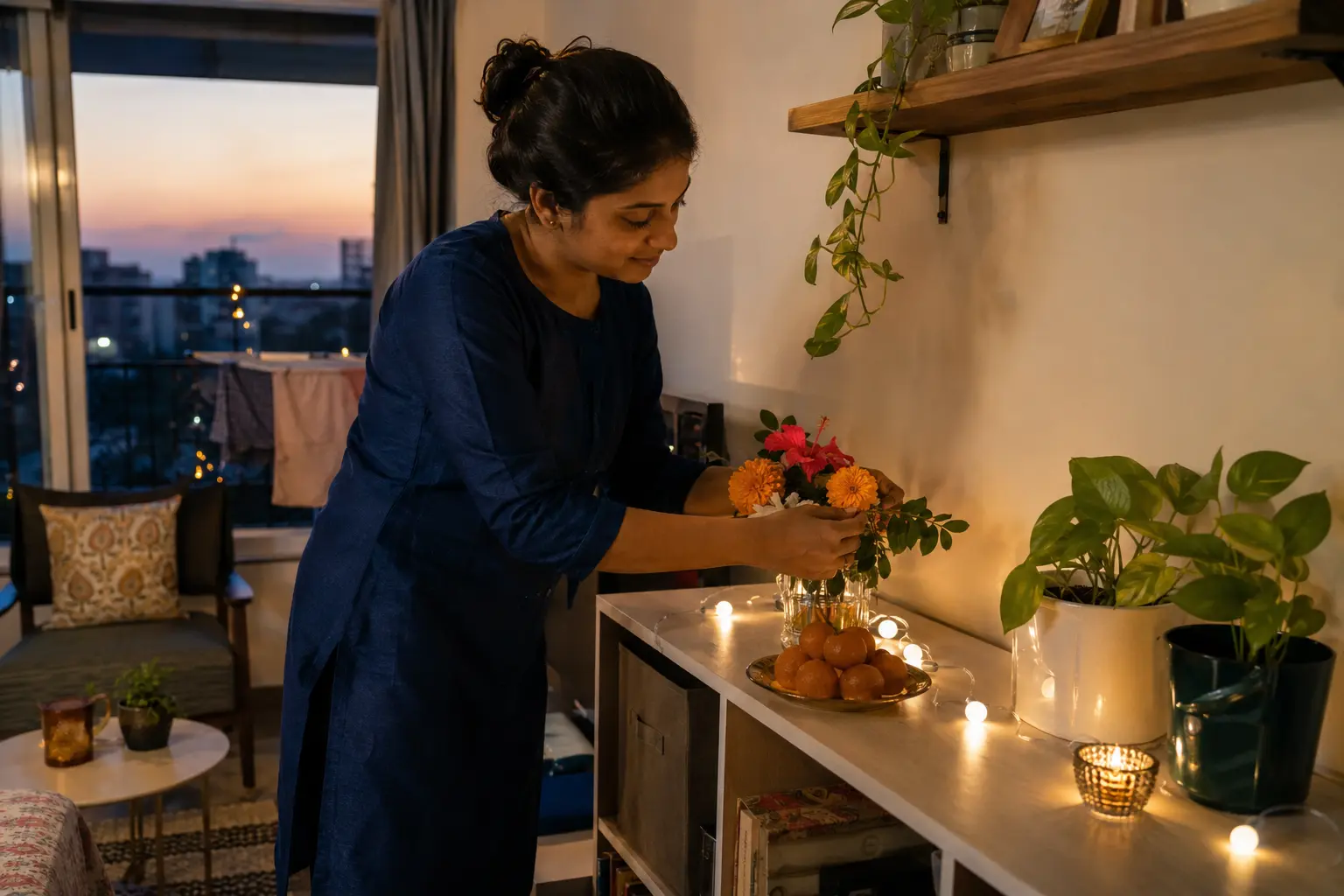
A smaller home does not need to imitate a larger one. Concentrating the celebration can make its meaning clearer and its practical risks easier to manage.
Design the room around movement
Before decorating, map the path from entrance to seating, food, bathroom, and exit. Beauty should not narrow the route people need.
- Keep floor decoration outside the main walking line or use a raised table version.
- Choose a window, shelf, or table as the visual focus instead of decorating every surface.
- Preserve step-free movement, seating choices, and a place for bags or shoes.
Treat flame as a space decision
Curtains, sleeves, shelves, pets, children, smoke alarms, and crowded tables reduce the margin around an open flame.
- Use rechargeable lights when attention or clearance is limited.
- If flame is used, place it on a stable heat-resistant surface with one named adult responsible.
- Follow lease, building, and local fire rules rather than assuming a household exception.
Choose a gathering that fits
A short open-house window, seated meal for a few people, or staggered visits may create more connection than crowding everyone into one time.
- Set an arrival window and realistic guest limit.
- Serve food that needs few dishes and little last-minute frying.
- Tell guests about stairs, parking, shoes, pets, and limited seating in advance.
A note on difference
Use this guide as planning support, not religious authority.
Dates, stories, practices, foods, and language vary across communities and households. Confirm what belongs with family, elders, religious institutions, and trusted local sources.
See our sources and date policy